
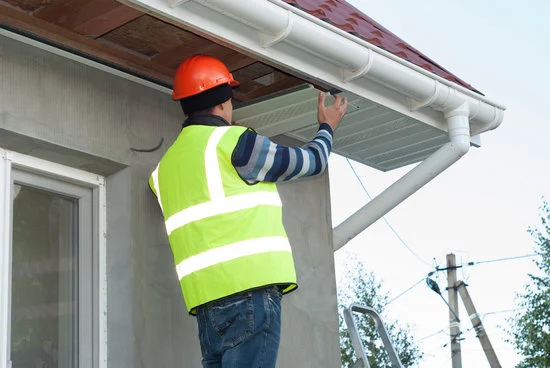
The edges of your roof contain several important components that homeowners often overlook until something goes wrong. Soffit, fascia and eaves work together to protect the roofline, support proper ventilation and help manage rainwater around your home.
Although these terms are sometimes used interchangeably, they refer to different parts of the roof.
Understanding what each component does can make it easier to identify problems such as peeling fascia, damaged soffits, poor attic ventilation or water appearing around the roof edge.
What Are Soffit, Fascia and Eaves?
The easiest way to understand these components is by looking at where they’re located.
The eave is the portion of the roof that extends beyond the exterior wall of the house.
The fascia is the vertical finishing board that runs along the edge of the roof and covers the ends of the roof rafters. Gutters are commonly attached along this area.
The soffit is the finished surface underneath the roof overhang, between the exterior wall and fascia.
Together, these components form and protect the transition between your roof and the exterior walls of your home.
What Is a Soffit?
The soffit is the underside of the roof overhang.
If you stand next to your house and look upward underneath the edge of the roof, the finished surface you see is generally the soffit.
Soffits help give the roofline a finished appearance, but their function goes beyond aesthetics.
Why Is Soffit Ventilation Important?
Many soffit systems contain vents that allow outside air to enter the attic.
When combined with properly designed roof or ridge ventilation, this airflow can help control heat and moisture inside the attic.
Good attic ventilation is particularly important because excessive moisture can contribute to condensation and deterioration of roofing components.
During Connecticut winters, proper insulation and ventilation are also important parts of controlling conditions that can contribute to ice-related roof problems.
However, simply having vented soffits doesn’t guarantee that an attic is properly ventilated. The complete ventilation system needs to work together.
What Is Fascia?
The fascia is the vertical board or finishing surface running along the lower edge of the roof.
It creates the visible transition between the roof and soffit and helps protect the ends of the rafters and roof structure.
Fascia also commonly provides the surface to which the gutter system is attached.
Because of its position, fascia is exposed to rain, snow and moisture around the roof edge.
This makes proper roof drainage particularly important.
What Are Roof Eaves?
The eaves are the edges of the roof that extend beyond the exterior walls.
This overhang helps move rainwater farther away from the siding and walls before it reaches the gutter system or ground.
The soffit is generally located underneath this overhang, while the fascia runs along its outer edge.
The exact construction varies depending on the architectural design of the home.
How Do Soffit, Fascia and Eaves Work Together?
These components perform different jobs but form one interconnected roof-edge system.
A simplified way to think about it is:
Roof → eave → fascia → soffit → exterior wall
The gutter system is typically positioned along the fascia to collect water coming from the roof.
The roof drip edge also plays an important role by helping direct water away from vulnerable areas of the roof edge and toward the gutter.
When everything is properly installed, these components help protect the roof structure while allowing water and ventilation to be managed correctly.
Signs of Soffit or Fascia Damage
Problems around the roof edge shouldn’t be ignored because the visible damage may indicate a moisture or drainage problem elsewhere.
Watch for signs such as:
- Peeling or blistering paint
- Cracked or deteriorated fascia
- Soft or rotting wood
- Sagging soffit panels
- Staining around the roof edge
- Loose or missing sections
- Evidence of moisture
- Gutters pulling away from the fascia
- Pest or insect activity around damaged areas
If you notice one or more of these symptoms, identifying why the damage occurred is just as important as replacing the damaged material.
What Causes Fascia and Soffit Damage?
Water is one of the most common causes.
Several roofing or drainage problems can expose the soffit and fascia to excessive moisture, including:
Damaged or Overflowing Gutters
When gutters overflow or leak, water may repeatedly reach the fascia instead of being carried safely away from the home.
Over time, this can contribute to deterioration.
If your gutters are no longer draining properly, it may be worth having the entire system inspected. Learn more about our gutter installation services.
Roof Leaks
Water entering near the roof edge can affect the roof decking, fascia and soffit.
Replacing damaged trim without fixing the source of the leak will not solve the underlying problem.
Missing or Damaged Drip Edge
Drip edge flashing helps direct water away from vulnerable areas along the edge of the roof.
If it is missing, damaged or incorrectly installed, water management around the fascia can be affected.
Storm Damage
Strong winds, falling branches, snow and ice can damage soffit panels, fascia and other roof-edge components.
Age and Weather Exposure
Like other exterior materials, soffit and fascia are continuously exposed to changing temperatures, moisture and weather.
Eventually, some materials may deteriorate enough to require repair or replacement.
Can Damaged Soffit and Fascia Be Repaired?
Yes. Localized soffit or fascia damage can often be repaired if the surrounding materials remain in good condition.
However, the source of the damage needs to be addressed first.
For example, replacing a section of rotted fascia without repairing the leaking gutter or roofing problem responsible for the moisture may result in the same damage returning.
More extensive deterioration may make replacement a better long-term solution.
When Should Soffit or Fascia Be Replaced?
Replacement may be appropriate when:
- Rot or deterioration affects multiple areas
- Large sections are loose or damaged
- Previous repairs continue to fail
- Moisture damage is widespread
- Ventilation needs to be improved as part of a larger roofing project
- The roof or gutter system is being replaced and the existing components are deteriorated
A roof inspection can help determine whether the problem is limited to the visible trim or involves other parts of the roofing system.
Why Gutters and Fascia Need to Work Together
The relationship between the gutter system and fascia is especially important.
Gutters collect water from the roof and direct it through downspouts. Because they are commonly installed along the fascia, problems with one system can affect the other.
A gutter that is sagging, overflowing or pulling away can place additional stress on the fascia.
Likewise, deteriorated fascia may no longer provide a secure surface for the gutter system.
This is why roof-edge and gutter problems are often best evaluated together rather than separately.
Soffit, Fascia and Roof Services in Stamford, CT
Connecticut homes experience rain, snow, ice and changing temperatures throughout the year, making proper protection around the roof edge particularly important.
My Roof Guys provides professional roofing services in Stamford, CT and surrounding Connecticut communities.
If you’ve noticed damaged fascia, soffits, gutters or other problems around your roofline, we can inspect the area and identify whether repair or replacement is appropriate.
For an inspection or estimate, contact My Roof Guys.